My Research
The research I conducted explored how Lifestyle Medicine can help adults in midlife (ages 40–65) — a stage when health changes often start to appear, but there’s still so much potential to turn things around.
As part of my Master of Lifestyle Medicine, I completed both a literature review and a research project looking at how people in midlife view Lifestyle Medicine and how they would like to be supported when making healthy lifestyle changes. I’m currently preparing these studies for publication in a journal, and will share the links here once they’re available.
Below is a quick overview of what each project explored.
Literature Review
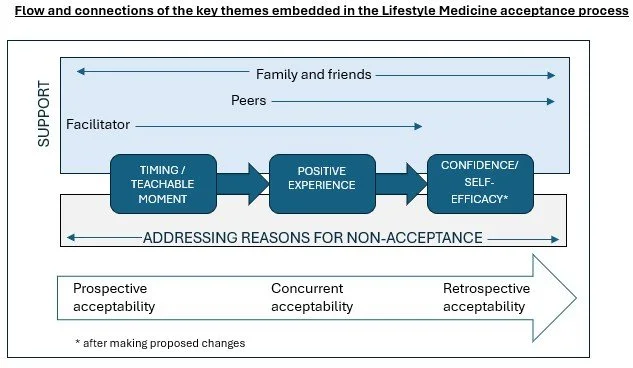
I conducted a review of 28 studies from Australia, the UK, Canada, and New Zealand to understand how people in midlife experience and engage with Lifestyle Medicine programs. The research found that Lifestyle Medicine is generally well-received, especially when introduced at the right time — often after a health scare or major life change — and when people feel supported, confident, and personally connected to the process.
The five key themes that stood out were:
Timing and Teachable Moments – health events often spark motivation to change.
Positive Experience – when programs are enjoyable and practical, people stick with them.
Support – guidance from professionals, peers, or family makes change sustainable.
Confidence & Self-Efficacy – feeling capable encourages lasting habits.
Non-acceptance – busy lives, low motivation, or not believing the health risks were real made it harder for people to stay involved..
Overall, the findings highlight that Lifestyle Medicine works best when it’s personalised, supportive, and introduced early, before chronic illness develops.
My goal is to help translate this evidence into real-life coaching - so that midlife becomes a time of empowerment, not decline.
Research Project - Lifestyle Medicine in Midlife Australians
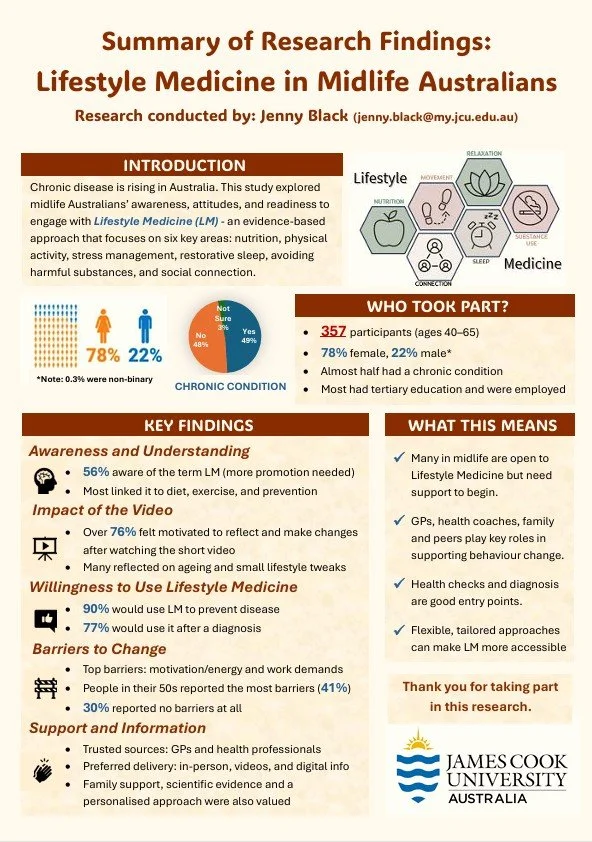
Through an Australia-wide online survey completed by 357 midlife participants, I looked at how people understand Lifestyle Medicine, their attitudes toward it, and what helps, or gets in the way, of making healthy lifestyle changes. The results showed that while many people believe lifestyle has a big impact on health, awareness of Lifestyle Medicine itself is still low. Most preferred personalised, practical advice from trusted health professionals and valued support from family, peers, and coaches.
Common barriers included motivation, time, cost, and emotional load, while key motivators were learning at the right time (such as during a health check or life transition) and feeling confident and supported.
Overall, the findings (summary shown in the picture) highlight that Lifestyle Medicine works best when it’s accessible, personal, and supported and when people are guided to take small, meaningful steps that fit into real life.